

In a future, not too far away…
I power up my computer and log onto the movement’s platform. Cup of hot tea in my hand. Old dog fast asleep behind me. Some things never change.
I love starting my day by checking out our online celebration channel. “Ethiopia submits trachoma elimination report” “Germany becomes the latest European country to pass a wealth tax” “Another fossil fuel company struggles and considers closure” “Cambodia scales up its Universal Basic Income pilot.” The eco-system is buzzing. I check my notifications and see some requests for an extra pair of hands, based on my profile. This week, it’s to develop training materials and facilitate a trust building session. This afternoon, I’m helping out at a rewilding project in my neighbourhood.
I think back to the start of my career. Back then, if someone wanted to “do good” (and they were neither doctor nor human rights lawyer), they joined a non-profit. Nowadays, that distinction no longer makes sense.
Many companies, challenged by employee activists, have started to realise that to recruit and hold on to talent, and remain relevant, growth-at-all-cost-business-as-usual was not going to cut it. People were thirsty for purpose, and the movement for change was overflowing with things to do.
We are administrators and architects, scientists and song writers, gardeners and grandmothers, funders and factory workers, lawyers and librarians, tech-experts and teachers, doctors and diplomats, and everything in between. Wherever we are. Some still work full-time in civil society organisations, many of us don’t. But we are no less part of the movement. We found new ways to combine activism and livelihood.
A few years ago, the situation felt dire and hopeless. Trump and Musk had proudly put USAID “into the woodchipper”. Some European politicians followed suit, shifting funds from aid and welfare, to military. For those who had made a career in “international development”, it felt like the rug was being pulled out from under our feet. For decades we had filled strategies with “rise of far-right populism” and “competitive funding landscape”. Suddenly the proverbial excrement was hitting the fan, and no shiny brochure could help us figure out what to do. Classic “development professional” positions became scarce, and we were forced to get creative.
To be honest, at that point, many of us were already having doubts about our sector’s ability to bring about transformative change, despite all our good will and achievements. And not because of lack of funding or “effectiveness” (which had always been our critics’ favourite).
Many were reeling that so many organisations and colleagues could stay silent in the face of the gen0c*de in Gaza. The “never again” postcards on our walls turned to “not our mandate” or “too complex”. Afraid that if we spoke up, donors would stop funding us or our careers would be impacted. In the empty halls of USAID and their subcontractors’ offices, Audre Lorde’s words echoed: “Your silence will not protect you.”
We were uneasy because, despite the discussions and toolkits, we still struggled to dismantle the colonial foundations on which the sector was built, and the rampant racist stereotypes we never quite managed to stop perpetuating.
It felt like we were at a crossroads. Would we hold on to a world in which a tiny minority take a wrecking ball to planet earth and her inhabitants, to hoard more wealth and power for themselves? In that world, our deeply imperfect sector did its very best. We put as many plasters on as many wounds as we could reach, even as the madmen still thrashed their knives about.
We were blamed, even sometimes blamed ourselves, for not eradicating poverty. But deep down, we understood that poverty and the ever-increasing gaps were not unfortunate circumstances. The global economic system in place, called capitalism, created these by design, accumulating capital for the few, at the expense of the many.
So we chose the other path. We decided to be part of building the new world that was emerging. If we listened very carefully, we could hear her breathing[i].
We started by looking in the mirror and saw we were ourselves part of the problem. We were in it to win, to grow. We competed with our peers and took the money, even when it meant focusing on symptoms rather than root causes. On reports rather than connection. Building a new world meant prioritising collaboration and trust over competition and control.
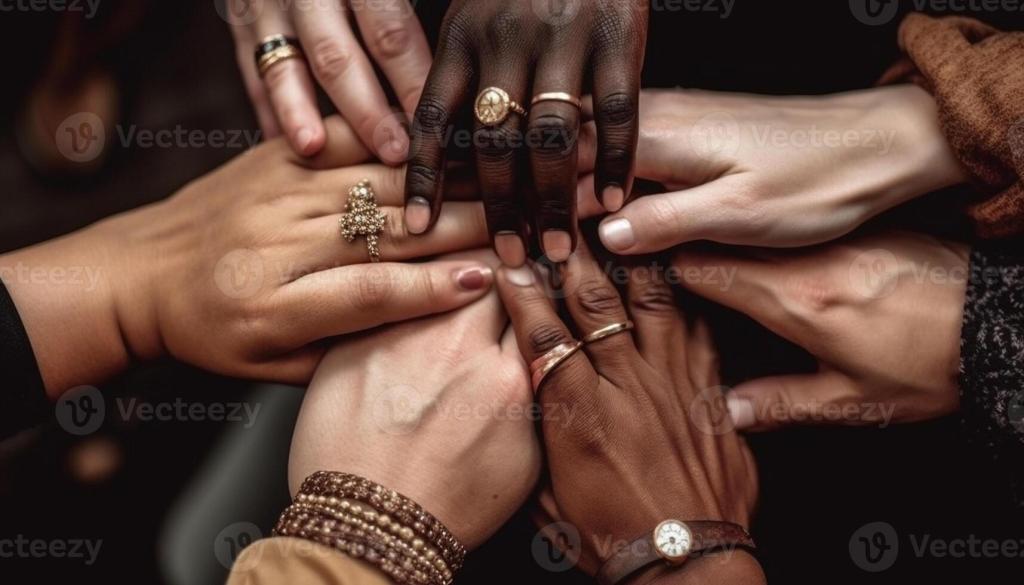
It meant seeing how deeply our respective liberation were interconnected[ii]. That there can be no social justice without climate justice, no democracy without redistribution, no inclusion without peace. We needed a much bigger tent, and “as wide an “us” as possible”[iii]. Words like “international development sector” stopped making sense. Instead, and building on past attempts, we became an international solidarity movement. We are united by the conviction that an economic system that enables us all to thrive on a healthy planet is not an unreasonable demand.
We moved out of our beloved logos and siloes. We stopped seeing ourselves as either consumers or human resources of the charity business. Donors or beneficiaries. We began to see each other as interdependent citizens, and the question became: how might we create platforms for all our unique contributions?[iv]
It meant speaking out. Seeing how our neutrality was in fact complicity. At first, we were scared to make people uncomfortable, offend, or loose support. But we found kind and connecting ways.
We remembered the wisdom and courage of Black, Brown and Indigenous people, people who revolted against slavery, against colonial invaders, those who went to jail so women could vote, and so much more. We remembered that big change had happened before and can happen again. Many of us were out of practice, so we listened, learnt, unlearnt, stepped forward. We remembered why we had joined the “sector” in the first place, that we were activists before we became advocates.
As I make myself another cup of tea, I find myself wishing I could send a message back in time. Something like “It’s going to be okay. We will come together and overcome. We are not out-numbered, we are out-organised[v]. It won’t be easy, but it will be worth it. In solidarity, Jess”
[i] “Another world is not only possible, she is on her way. Maybe many of us wont be here to greet her, but on a quiet day, if I listen very carefully, I can hear her breathing.” – Arundhati Roy
[ii] “If you have come here to help me you are wasting your time, but if you have come because your liberation is bound up with mine, then let us work together.” – Lilla Watson
[iii] Solidarity: The Past, Present, and Future of a World-Changing Idea, Leah Hunt-Hendrix, Astra Taylor
[iv] Citizens: Why the Key to Fixing Everything is All of Us, Jon Alexander
[v] “We are not out-numbered, we are out-organised” Malcolm X.
 Jess Blijkers
Leave a comment